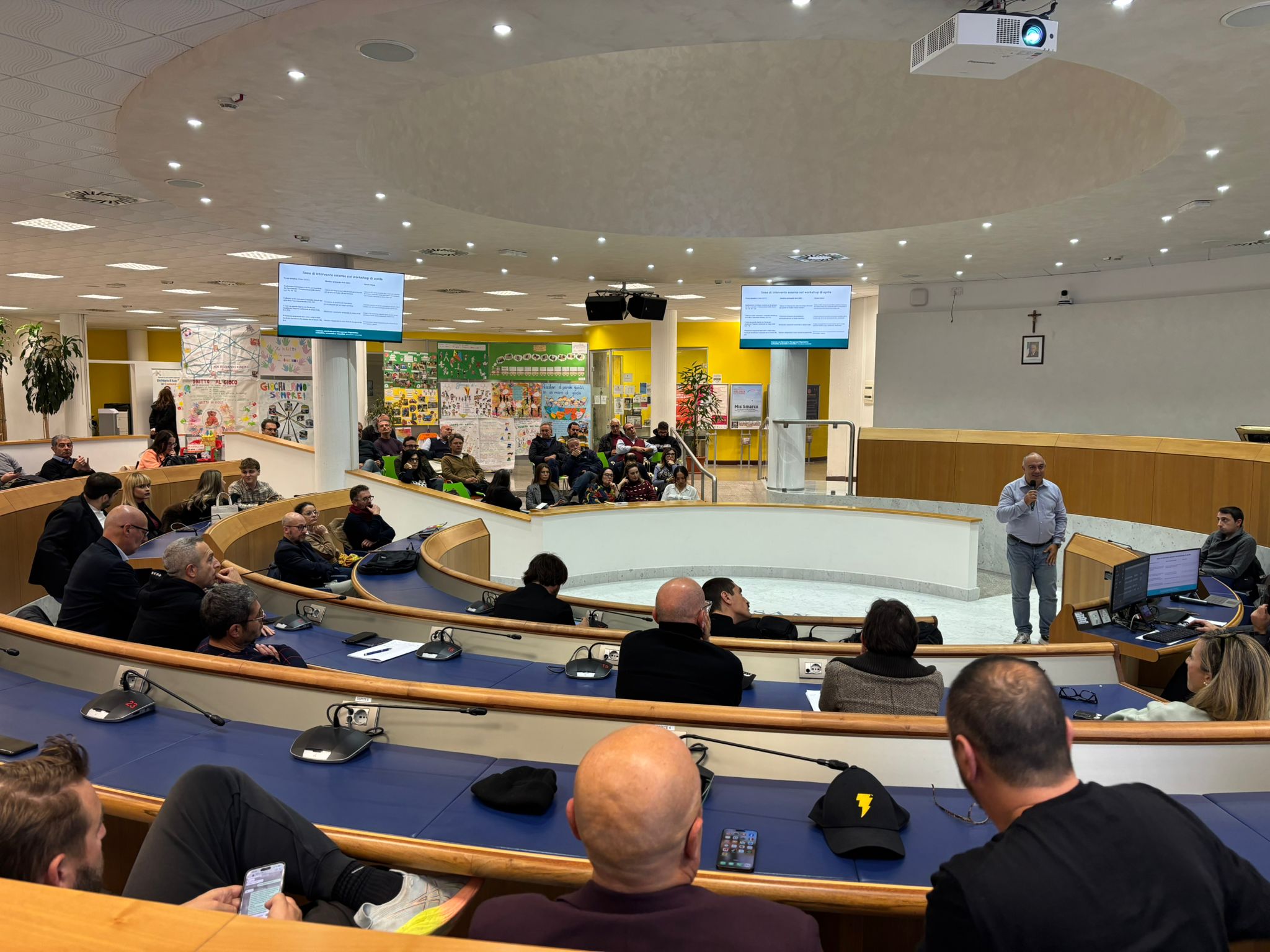

Last Friday marked a pivotal moment for the Euro-Med MAST and Libeccio projects as they joined forces for the second capacity-building event on innovation, hosted in the Council Hall of San Benedetto del Tronto (Marche region, Italy). This gathering catalysed the advancement of the DMO “Riviera e Borghi del Piceno” while showcasing the transformative potential of two landmark European initiatives dedicated to sustainable and inclusive tourism.
Led by Mauro Alfonsi (Head of Tourism Services) and Sergio Trevisani (Head of EU Policies & Ecological Transition), the event brought together administrators, tourism operators, businesses, universities, and local stakeholders in a focused exploration of how cutting-edge tools and methodologies can reshape destination management.
The centrepiece of the event was the MAST project (coordinated by the University of Urbino as project lead), which presented its innovative assessment framework for evaluating accommodation facilities’ compliance with ISO 21401 accessibility standards and measuring their sustainability performance. Professor Guido Capanna Piscè of the University of Urbino opened the proceedings with a compelling vision of how the Global Sustainable Tourism Council (GSTC) criteria can anchor digital governance tools and drive real transformation. He demonstrated how environmental, social, and management sustainability standards, -when embedded into technological solutions, enable real-time monitoring systems, integrated data analytics, and rigorous impact measurement. This approach firmly establishes the nexus between technological innovation and long-term sustainability, positioning accessibility and inclusive tourism as core governance priorities rather than peripheral considerations.
Complementing MAST’s accessibility framework, the Libeccio project unveiled its flagship DMSS (DMO Sustainability and Service Management System), a comprehensive platform engineered to enhance destination governance. Mirco Mirabilio, representing CNA Abruzzo (a key partner within the Libeccio consortium), synthesised the strategic rationale for data-driven governance. He articulated how the DMSS transforms data into actionable intelligence for administrators and operators, enabling holistic destination management grounded in sustainability metrics, visitor experience optimisation, and evidence-based decision-making. The platform embodies the Libeccio project’s commitment to equipping DMOs with intelligent systems that balance competitiveness with responsibility.
Together, the MAST and Libeccio projects represent a comprehensive ecosystem for modern destination development: MAST ensures that accessibility and sustainability become measurable, verifiable standards embedded within tourism infrastructure; Libeccio provides the management infrastructure and data systems necessary to implement these standards at scale across entire destinations.
The presentations were complemented by contributions from complementary initiatives. Professor Andrea Polini (UNICAM) and collaborator Melania Fattorini illustrated how digitalisation enhances local identity and visitor experience through the EPPOI project, whilst Alessandro Leoni (Foodiestrip) shared lessons from the Spidit project on smart data management, from environmental sensors to territorial big data platforms and real-time dashboards. Raniero Di Gregorio introduced DORI, an AI-powered assistant accessible via WhatsApp, demonstrating innovative approaches to personalised visitor services.
The event concluded with an enriching open discussion, featuring representatives from key local associations alongside students and citizens. Contributions reaffirmed the collective ambition to build a modern, sustainable, innovative, and genuinely participatory DMO—one anchored by the robust frameworks and intelligent systems developed within the MAST and Libeccio projects.
The DMO “Riviera e Borghi del Piceno” continues its trajectory toward an integrated and responsible future for tourism, now equipped with the tools and methodologies presented during this landmark capacity building session. The community looks forward to the third event, focusing on accessibility, on Friday 28 November—a testament to the region’s commitment to networked expertise, shared vision, and cutting-edge tools for competitive and sustainable tourism.